
Anything that will not fit within the internal dimensions of a standard container, whether by height, width or length. Once cargo is out of gauge it stops being priced per container and starts being priced on the space and equipment it actually occupies, which is why an accurate set of dimensions changes the quote far more than an accurate weight does.
Heavy Industrial Logistics & Transport
- Home
- Industrial
Industrial Freight & Heavy Cargo Logistics
Spares Desk Logistics provides tailored freight and logistics solutions to support the complex demands of the industrial sector. We specialize in the transportation of raw materials, heavy machinery, construction equipment, and finished industrial goods across global markets — with expertise in handling oversized and high-value cargo.
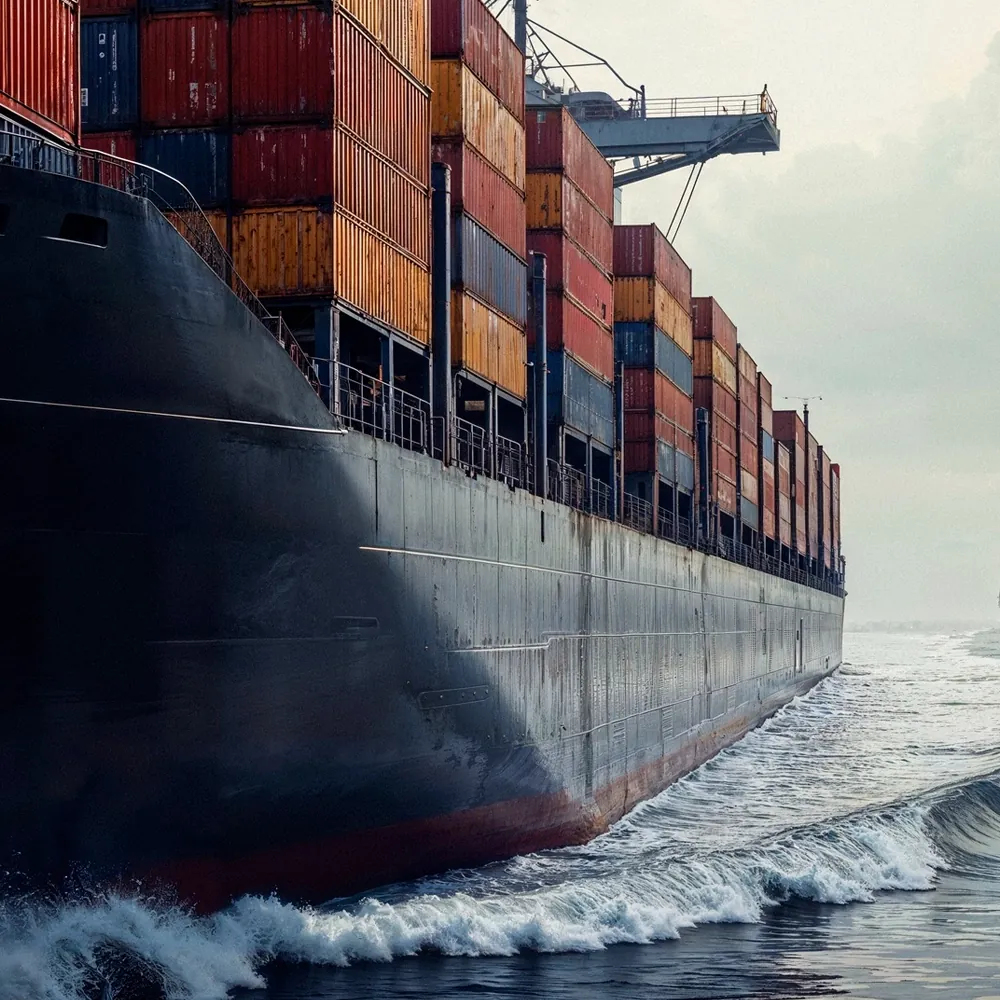
Multi-modal transport, project-based scheduling, and customs compliance for industrial and heavy cargo shipments.
What Industrial Cargo Demands
Industrial freight is defined by weight and dimension before anything else. A machine that cannot pass under a bridge on the final leg is not a problem to discover at the destination — it is a routing decision that belongs at the start. We survey the piece, confirm lifting capacity at both ends, and obtain permits where the load is abnormal. Raw materials and construction equipment move multimodally wherever that beats a single mode on cost or time.
Key Features of Our Industrial Freight Service
Heavy Lift & Oversized Cargo
Specialized lifting, securing, and transportation of heavy machinery, raw materials, and construction equipment.
On-Time Delivery
Dedicated scheduling and routing efficiency to ensure shipments arrive on time, every time — without costly delays.
Project-Based Scheduling
Coordinated project logistics with timeline management to support industrial operations and construction deadlines.
Regulatory Compliance
Full customs clearance and regulatory compliance management for industrial imports and exports worldwide.
End-to-End Support
Our team delivers end-to-end support from origin to final destination — ensuring reliable operations at every stage.
Customer Satisfaction
We pride ourselves on reliability and client trust, delivering consistent service that supports your global supply chain.
When Cargo Stops Fitting in a Container
Industrial freight is mostly ordinary until a single dimension crosses a threshold, and then almost everything about it changes. Cargo that exceeds the internal dimensions of a standard container moves to flat racks, open tops, breakbulk or roll-on roll-off, and the cost stops being a container rate and becomes a function of the space, the equipment and the handling the piece actually needs.
The lift matters as much as the voyage. Weight alone does not determine feasibility - lifting points, centre of gravity, whether the item can be tilted, and what the receiving site can physically get a crane onto all decide whether a delivery completes or stalls at the quay. These are questions to settle before booking, not after arrival.
Industrial deadlines are usually tied to something that cannot move. A plant shutdown, a commissioning date or a rig mobilisation defines a window, and equipment that arrives outside it is either useless or expensive to store. Planning therefore identifies the critical path first and treats the freight booking as the consequence of it.
Matching oversized cargo to equipment
| Cargo profile | Usual equipment | The constraint to check first |
|---|---|---|
| Fits a standard container | 20ft or 40ft container | Door aperture, which is smaller than the internal dimensions |
| Over height, or needs top loading | Open top container | Crane access at both ends |
| Over width or over length | Flat rack | Lashing points and any road permits for the inland legs |
| Too large for any container | Breakbulk on a conventional vessel | Port lifting capacity and available laydown area |
| Wheeled or trackable | Roll-on roll-off | Whether the unit can be driven or towed, and its ground clearance |
Industrial Freight FAQs
What counts as out-of-gauge cargo?
Do you arrange lifting at both ends?
Lifting is planned as part of the routing rather than left to the receiving site. That means confirming crane capacity, establishing the lifting points on the item itself, and checking that the access road and the standing ground can take the load. A lift that cannot be completed on arrival leaves cargo sitting on a quay accruing storage.
Can you work to a plant shutdown date?
Shutdown windows are the hard version of a deadline: the equipment is useless if it lands the day after the plant restarts, and idle if it lands a month early. We plan to a delivery window rather than a delivery date, with the critical path identified early so that a delay in one leg is visible while there is still time to change the route.
What information do you need to quote heavy cargo?
Dimensions and weight per piece, the centre of gravity if it is not obvious, whether the item can be tilted or must stay upright, and photographs. For anything unusual a marine surveyor may need to approve the stowage and lashing, and it is far cheaper to involve them at quotation than after a booking has been made on the wrong equipment.