
Usually that it cannot be handled by standard equipment, or that its delivery is tied to a fixed operational window. Once a piece needs a specific crane, a permit for the road leg, or a survey before it can be stowed, it is being managed as a project even if there is only one item in it.
Heavy Marine Project Logistics
- Home
- Heavy Marine Project Logistics
Heavy Lift and Offshore Project Cargo Logistics
Marine Project Logistics involves the specialized planning, coordination, and execution of transporting large, heavy, or complex cargo via sea routes to support offshore and coastal projects. Spares Desk Logistics provides comprehensive marine logistics solutions tailored to meet the unique challenges of the marine and offshore industries.
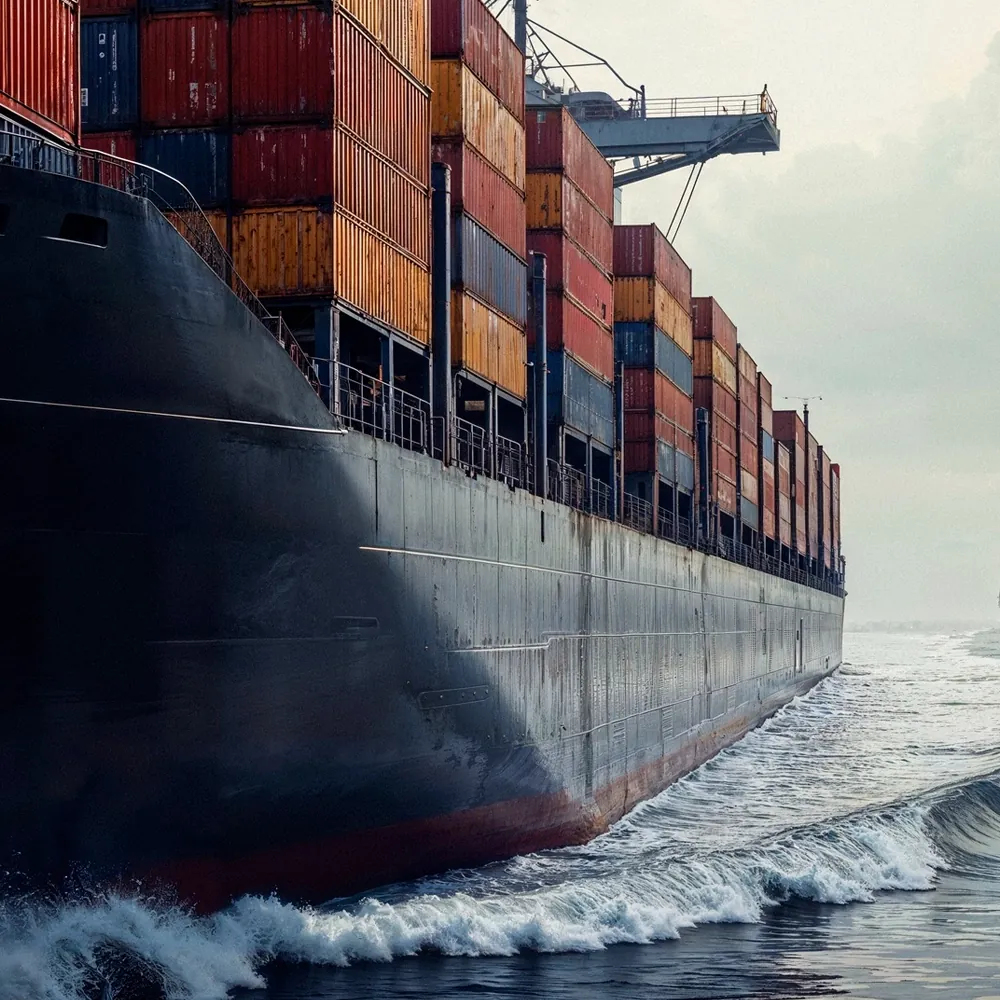
From heavy lift vessels to multimodal coordination — expert marine project logistics for complex offshore and coastal operations.
Moving Cargo That Will Not Fit a Container
Project cargo is planned backwards from the discharge point. Lifting capacity at the destination, road restrictions on the final leg and permit lead times all constrain the route long before a vessel is booked. We survey the piece, confirm what can physically receive it, and build the routing around those limits. Out-of-gauge, heavy-lift and breakbulk shipments carry their own insurance and method statements, and we coordinate the lift rather than handing it to the terminal.
Key Features of Our Marine Project Logistics
Route Surveyed First
Bridge heights, turning circles and axle limits on the final leg decide the route long before a vessel is chosen.
Lifting Capacity Confirmed
Crane and quay capacity at both ends is verified against the actual piece weight, not the estimate on the order.
Method Statements
Lift plans and rigging arrangements are documented and agreed with the terminal in advance rather than settled on the day.
Out-of-Gauge and Heavy Lift
Flat-rack, open-top and breakbulk options for cargo that exceeds container dimensions in any direction.
Permits and Escorts
Abnormal load permits, police escorts and any road closures are arranged for the oversized final movement.
Project Cover
Insurance written against full project value, including the lift itself, not transit alone.
Where the Plan Comes Before the Booking
Project cargo inverts the usual order of work. With general freight you book the movement and then handle the details; with project cargo the details decide whether a movement is possible at all. Crane capacity, lifting points, road permits, vessel availability and the receiving site's ground conditions are inputs to the plan, not consequences of it.
Heavy lift and offshore work also carry approvals that take their own time. A marine warranty surveyor may need to sign off stowage and lashing; offshore lifting equipment needs valid certification; oversized road legs need permits from each authority on the route. None of these can be compressed by booking earlier freight.
Because the pieces are often unique, the risk sits in the handovers rather than the voyage. A lift that cannot be completed at the receiving end leaves cargo on a quay accruing storage while a larger crane is found - which is why the discharge end is planned with the same care as the load port.
Planning inputs for project cargo
| Input | What it decides | When it is needed |
|---|---|---|
| Dimensions and weight per piece | Equipment, vessel and whether the cargo is out of gauge | At enquiry, before any booking |
| Centre of gravity and lifting points | Whether the piece can be lifted safely and how | Before the lift plan is produced |
| Crane capacity at both ends | Whether the route is feasible at all | Before the routing is fixed |
| Road permits for inland legs | Timing, and sometimes the route itself | Weeks ahead; permits are not issued on demand |
| Delivery window | Whether the plan works backwards or forwards | At enquiry, with the shutdown or commissioning date |
Marine Project Logistics FAQs
What makes something project cargo rather than normal freight?
Do you produce lift and method plans?
The lifting arrangement is settled as part of the routing - lifting points, centre of gravity, the crane capacity available at each end, and whether the receiving ground can take the load. For unusual pieces a marine warranty surveyor may need to approve the stowage and lashing before loading, and that approval is scheduled rather than assumed.
Can you deliver to offshore installations?
Offshore delivery adds a supply vessel leg and a weather window to the plan, and cargo has to be packed and certified for offshore lifting rather than for a quayside handover. Baskets and containers used offshore have their own inspection and certification requirements, which are checked before the cargo is accepted.
How early should project cargo be discussed?
As soon as the dimensions are known, which is often long before the equipment is finished. The constraints that decide a project route - vessel availability, crane capacity, road permits, a shutdown date - all have lead times measured in weeks. Discovering them after the equipment is built is where project logistics gets expensive.